| Author |
Propagation loss Question |
Deamon
Joined: May 10, 2002
Posts: 620
From: Germany
|  Posted: 2002-11-26 23:36
I need to know how to calculate the attenuation coefficient of a given frequency ?
attenuation coefficient = x dB/m at a given frequency
If someone is in knowledge,would be happy about a reply.
_________________

IMPERIAL U-FLOTILLA 1914-1918
Current stage: Designing - Research - Coding.
Current activity: Designing and coding the sonar engine and define class tree
Status: 2%
[ This Message was edited by: Deamon on 2002-11-26 23:45 ]


|
Kennebec
Joined: Feb 28, 2002
Posts: 1259
From: Virginia - USA
| Posted: 2002-11-27 20:03
Form this link http://www.fas.org/man/dod-101/sys/ship/acoustics.htm#intensity
Note: The rate at which sound is absorbed by water is related to the square of frequency (a µ f 2); lower frequency sounds have low absorption coefficients and therefore propagate long distances. If you know the frequency of the sound you're dealing with, the attenuation coefficient (a) can be looked up in the appropriate table or graph in any acoustics textbook.
An example.....
What is a humpback whale's sound intensity level at 1 km in deep water (assume spherical spreading)?
source level = 150 dB re 1µPa @ 1 meter, frequency = 120 Hz therefore a ~ .003
transmission loss = TLg + TLa = 20 log (1 km) + .003(50) = 60 +.15 = 60.15 dB re 1µPa @ 1 meter.
SIL = SL - TL
SIL = 150 - 60.15
SIL @ 90 dB
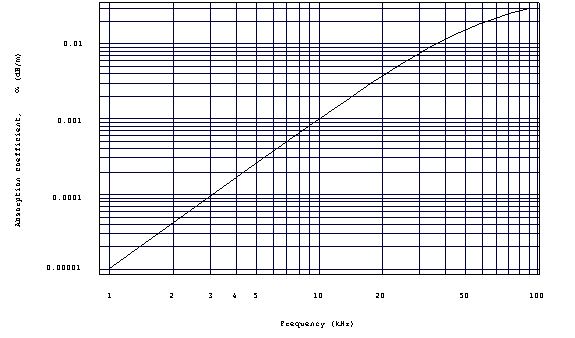
Other than this you will have to ask the heavies because I don't know squat about it 

|
Deamon
Joined: May 10, 2002
Posts: 620
From: Germany
| Posted: 2002-11-28 03:32
Thanks for your reply Kennebec and thanks for the linke.I know fas.org and the other docs on sonar,but must somehow overseeing this doc.
But anyway,i asked couse when it comes down to formulas than i fail pretty fast and have some difficulties to translate english mathematical terms in to german.But as i start with modeling,i have a need to understand it now.
So my first question what exactly means square in the term square frequency ?
_________________
IMPERIAL U-FLOTILLA 1914-1918
Current stage: Designing - Research - Coding.
Current activity: Designing and coding the sonar engine and define class tree
Status: 2%
[ This Message was edited by: Deamon on 2002-11-28 05:02 ]
|
Monophonic
Joined: Feb 28, 2002
Posts: 279
From: Espoo, Finland
| Posted: 2002-11-28 04:41
square = raised to the power of two
(cube = raised to the power of three)
_________________
Signature unavailable during refit&resupply.
  
|
Deamon
Joined: May 10, 2002
Posts: 620
From: Germany
| Posted: 2002-11-28 05:13
Ok,that's what square means!? Thanks alot Monophonic.
Next question would be,if looking at next lines:
source level = 150 dB re 1µPa @ 1 meter,
What means: re 1µPa
frequency = 120 Hz therefore a ~ .003
And: ~ .003 does this mean 0.003Hz attenuation every meter?
_________________
IMPERIAL U-FLOTILLA 1914-1918
Current stage: Designing - 3D Modeling - Resurch.
Current activity: Designing sub AI and sonar engine
Status: 2%
|
Bill Nichols
Joined: Feb 27, 2002
Posts: 664 | Posted: 2002-11-28 09:34
Quote:
|
On 2002-11-28 05:13, Deamon wrote:
Next question would be,if looking at next lines:
source level = 150 dB re 1µPa @ 1 meter,
What means: re 1µPa
|
|
Sound is measured as decibels of sound pressure level compared to a reference level. The reference level of pressure used in sonar calculations is '1 micro-Pascal', or '1µPa'.
Also, your question, "And: ~ .003 does this mean 0.003Hz attenuation every meter?"
Not exactly. In the example given, a ~ .003 at 120 Hz. This means, a 120 Hz signal would attenuate 0.003 decibels (not Hz) every meter.
Also note that this is just the absorption part of signal loss -- spreading losses are something else and are additional.
_________________
My Sub Command website: www.subguru.com

[ This Message was edited by: Bill Nichols on 2002-11-28 12:30 ]
|
Mcarm
Joined: Jul 22, 2002
Posts: 591
From: Cork, Ireland...Somtimes!
| Posted: 2002-11-28 11:31
Loud whale
_________________
Cheers
Mcarm


|
Deamon
Joined: May 10, 2002
Posts: 620
From: Germany
| Posted: 2002-11-30 01:10
Thanks Bill vor the clear explanations and thanks to other guys.Now i understand and going to reread some documents and will be back later with some more questions.
Just need to know one more thing.In this line:
transmission loss = TLg + TLa = 20 log (1 km) + .003(50) = 60 +.15 = 60.15 dB re 1µPa @ 1 meter.
what does the 20 Log mean ? i often have seen this term but still don't know what that mean.
Cheers
_________________
IMPERIAL U-FLOTILLA 1914-1918
Current stage: Designing - Research - Coding.
Current activity: Designing and coding the sonar engine and define class tree
Status: 2%
[ This Message was edited by: Deamon on 2002-11-30 01:12 ]
|
Monophonic
Joined: Feb 28, 2002
Posts: 279
From: Espoo, Finland
| Posted: 2002-11-30 05:19
20 is just a multiplier.
log means a logarithm, they've left the base out so I'd guess it's 10. See http://mathworld.wolfram.com/Logarithm.html for in-depth explanation.
_________________
Signature unavailable during refit&resupply.
|
Bill Nichols
Joined: Feb 27, 2002
Posts: 664 | Posted: 2002-11-30 07:22
Quote:
|
On 2002-11-30 01:10, Deamon wrote:
Just need to know one more thing.In this line:
transmission loss = TLg + TLa = 20 log (1 km) + .003(50) = 60 +.15 = 60.15 dB re 1µPa @ 1 meter.
what does the 20 Log mean ? i often have seen this term but still don't know what that mean.
|
|
The transmission loss example shown above is for signal strength after 50 km of attenuation. Sound attenuation in water has two main contributors: spreading loss (TLg) and absorption (TLa). The spreading loss term is calculated as:
TLg = 20 log(R) where R is the range (in km) and log is the common (base 10) logarithm. Note that the example has a typo here, the correct example is:
transmission loss = TLg + TLa = 20 log (50 km) + .003(50) = 60 +.15 = 60.15 dB re 1µPa @ 1 meter.
Hope this helps!
_________________
My Sub Command website: www.subguru.com
|
Deamon
Joined: May 10, 2002
Posts: 620
From: Germany
| Posted: 2002-11-30 10:04
Ok,now its clear.If i understand it right than 20 in the 20 log term is the coefficient of the logarhitmical spreading loss right ? and what means base 10 ?
_________________
IMPERIAL U-FLOTILLA 1914-1918
Current stage: Designing - Research - Coding.
Current activity: Designing and coding the sonar engine and define class tree
Status: 2%
[ This Message was edited by: Deamon on 2002-11-30 10:04 ]
|
Deamon
Joined: May 10, 2002
Posts: 620
From: Germany
| Posted: 2002-12-01 10:38
Thanks for the link Monophonic.
_________________
IMPERIAL U-FLOTILLA 1914-1918
Current stage: Designing - 3D Modeling - Resurch.
Current activity: Designing sub AI and sonar engine
Status: 2%
|
Bill Nichols
Joined: Feb 27, 2002
Posts: 664 | Posted: 2002-12-01 11:42
Quote:
|
On 2002-11-30 10:04, Deamon wrote:
what means base 10 ?
|
|
"Base 10" means that the logarithm is based on the number ten. It's also known as the 'common log'. Another type of logarithm is the 'natural log', based on the number 'e'. It's standard mathematics.
_________________
My Sub Command website: www.subguru.com
|
Deamon
Joined: May 10, 2002
Posts: 620
From: Germany
| Posted: 2002-12-01 17:10
Well,never had this in scool.Pretty poor huh?
Ok,have the link now and will go through it.Thats it for now.Will be back with more questions soon.
Thanks.
BTW: As what did you served on the sub ?
_________________
IMPERIAL U-FLOTILLA 1914-1918
Current stage: Designing - 3D Modeling - Resurch.
Current activity: Designing sub AI and sonar engine
Status: 2%
|
Deamon
Joined: May 10, 2002
Posts: 620
From: Germany
| Posted: 2003-01-15 17:30
Hi all,
there is still a thing i don't understand in the equation below:
transmission loss = TLg + TLa = 20 log (50 km) + .003(50) = 60 +.15 = 60.15 dB re 1µPa @ 1 meter.
if the loss qoefficient is the frequency in square,how do i get then the 0.003 ???
_________________
IMPERIAL U-FLOTILLA 1914-1918
Current stage: Designing - 3D Modeling - Resurch.
Current activity: Designing sub AI and sonar engine
Status: 2%
|




